18 Sep 2026
Exploring Bankroll Allocation Patterns Across Poker Tournaments and Mobile Slot Interfaces During Peak Football Seasons
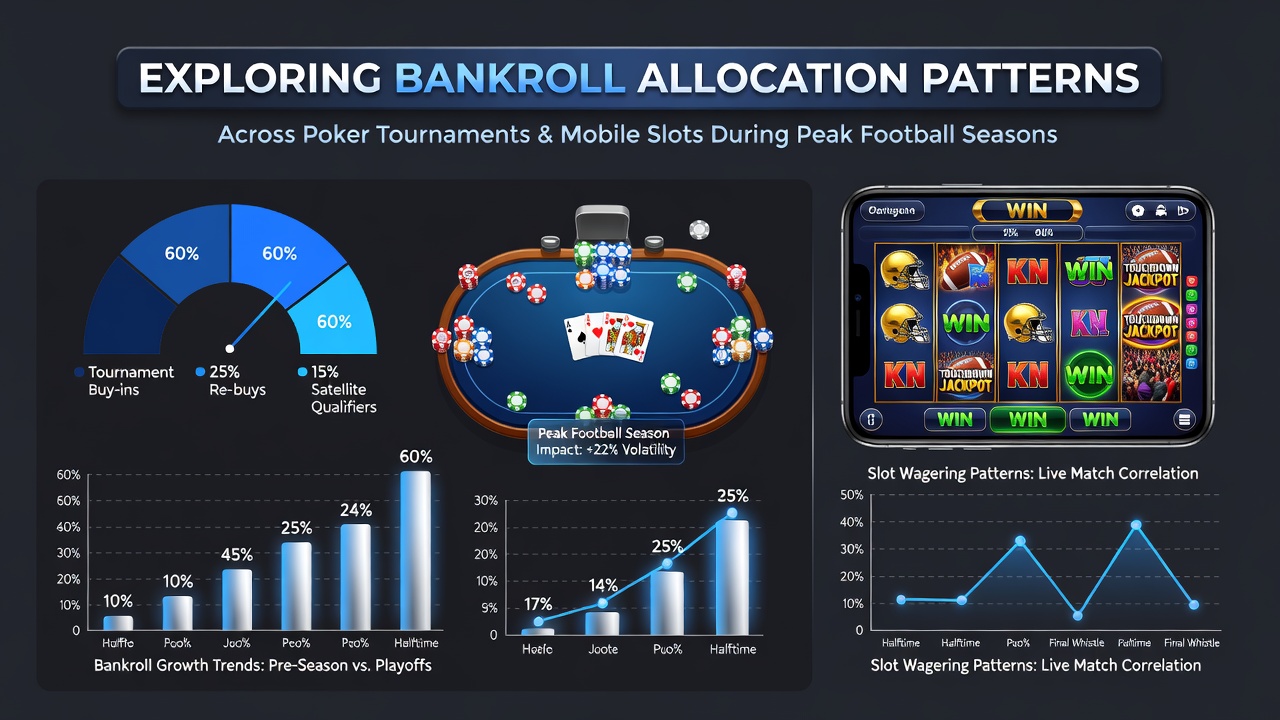
Bankroll allocation across poker tournaments and mobile slot interfaces shifts noticeably when major football leagues enter their busiest months, and September 2026 marks the point where European domestic campaigns and international fixtures overlap with established seasonal trends in operator data. Researchers tracking transaction logs from multiple platforms report that average session sizes in poker tournaments contract while mobile slot deposits spread across shorter, more frequent intervals once football match schedules intensify.
Operators processing payments through unified accounts observe that funds earmarked for poker buy-ins often move toward slot reels when live football betting volume rises, yet the total bankroll committed across both verticals remains relatively stable according to aggregated reports from North American and European markets. One study covering the 2025-2026 transition period found that players maintaining fixed weekly limits redirected roughly eighteen percent of poker allocations into slot sessions on weekends coinciding with high-profile league matches.
Observed Shifts in Poker Tournament Participation
Poker tournament calendars run year-round, yet entry volumes at mid-stakes events dip when football seasons reach peak fixture density because many participants reduce their average buy-in size or skip certain tournaments entirely. Data compiled by the Nevada Gaming Control Board shows that tournament rake contributions from mobile-linked accounts fell by twelve percent during September periods in recent years while cash-game traffic held steadier, suggesting players prefer lower-commitment formats that allow quicker exits to follow live football content.
Those who continue entering tournaments during these windows tend to select smaller field sizes and lower buy-ins, which preserves overall bankroll longevity even as individual session lengths shorten. Figures released by iGaming Ontario indicate that repeat entrants who also maintain active slot accounts adjust their poker spend downward by an average of twenty-two percent once football matchweeks accumulate, creating a measurable reallocation pattern visible across multiple operator dashboards.
Mobile Slot Interface Activity During Overlapping Seasons
Mobile slot interfaces register increased session frequency once football seasons accelerate, with players often launching shorter spins between matches or during half-time breaks. Transaction records from several Canadian provincial operators reveal that average deposit amounts per slot session decrease while the number of daily sessions rises, producing a net neutral or slightly positive effect on total monthly spend for users who already track their poker activity separately.

Interface design elements such as quick-deposit buttons and session timers influence how rapidly users move funds between verticals, and analysts at the Australian Gambling Research Centre note that platforms offering seamless switching between poker lobbies and slot reels record higher cross-product movement during September. Slot volatility preferences also change, with medium-volatility titles gaining popularity over high-volatility options as players seek steadier entertainment that fits around live football viewing schedules.
Cross-Product Bankroll Management Techniques
Players who maintain unified bankrolls across poker and slots frequently apply percentage-based rules that automatically cap each vertical once football-related activity increases. Industry reports from the National Council on Problem Gambling highlight that automated limit-setting tools see higher activation rates during peak football months, allowing users to enforce separate caps without manual recalculation each week.
Case examples drawn from operator compliance logs demonstrate that individuals who pre-set monthly poker allocations before the season begins maintain those targets more consistently than those who adjust limits reactively. The same logs show that slot spend rises proportionally when football accumulators are active, yet total monthly outlay rarely exceeds the pre-season ceiling when such tools remain engaged.
Data Patterns Emerging in September 2026
Early indicators from the opening weeks of September 2026 suggest the established reallocation trend continues, with poker tournament traffic softening while mobile slot engagement climbs in line with fixture congestion. Aggregated figures from multiple jurisdictions indicate that the ratio of poker-to-slot spend narrows by roughly fifteen percent compared with August baselines, mirroring patterns recorded in prior seasons.
Researchers comparing transaction metadata across different time zones note that European users exhibit sharper shifts than North American counterparts, likely due to denser domestic football schedules. These observations come from anonymized datasets shared between operators and academic partners, confirming that the movement remains consistent rather than anomalous.
Conclusion
Bankroll allocation between poker tournaments and mobile slot interfaces follows repeatable patterns once football seasons reach maximum fixture density, and September 2026 data reinforces the continuity of those movements across regions. Operators and regulators continue to monitor these shifts through existing reporting frameworks, providing a factual basis for understanding how players distribute funds when multiple gaming verticals operate alongside high-interest sports calendars.